How SMBs Are Compressing AI Deployment From Months to 30 Days Without Enterprise Budgets
Small businesses skip enterprise approval layers and deploy AI in weeks, not quarters.
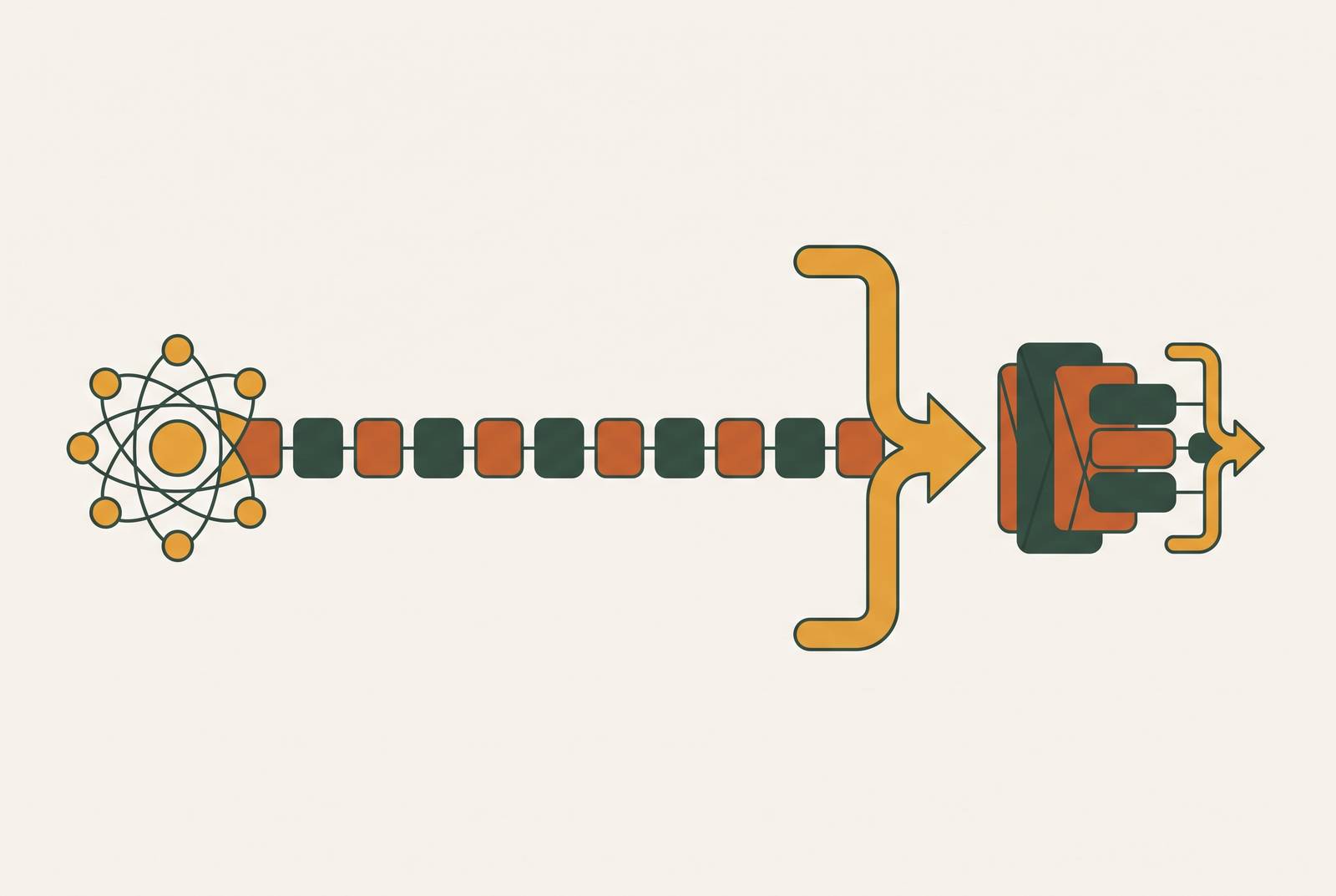
The standard AI deployment timeline of months to over a year is an enterprise artifact, not a technology constraint. Small and midsize businesses that accept it as the default are solving the wrong problem. The businesses getting AI into production in 30 days are not cutting corners. They are using a structural advantage most of them do not realize they have.
Why enterprise AI timelines don't translate to SMBs — and why that's the wrong benchmark
Enterprise AI timelines are driven by governance cycles, procurement reviews, multi-system integration, and organizational change management, not by the AI engineering itself. The traditional enterprise approach runs through sequential phases: assess, strategize, design, build, test, deploy. Each phase requires stakeholder sign-off before the next one begins. That structure, not the technology, drives the 9 to 18 month window for enterprises and the 12 to 24 plus month window for large enterprises.
SMBs below a certain headcount face a fundamentally different constraint profile. Their limits are budget and in-house data readiness, not governance layers. A decision that requires a steering committee, a program manager, and a transformation roadmap at an enterprise can often be made by one owner in an afternoon. Smaller organizations simply do not have the approval infrastructure that slows large ones.
This is why SMB owners who have concluded that AI takes too long are carrying an enterprise assumption into a context where it does not apply. The benchmark itself is the problem. Measuring a 50-person company against the timeline of a 10,000-person organization means importing constraints that were never present to begin with.
The deployment data makes the point clearly. For enterprises, the dominant constraint is governance, procurement, and multi-system integration. That constraint shrinks dramatically as company size decreases. What remains for smaller businesses is a much narrower set of challenges, and those challenges respond to a different kind of methodology.
The structural features of a small business that make faster deployment possible
SMBs deploy AI faster not because they are cutting corners but because their organizational structure removes the categories of friction that make enterprise deployment slow. The first of these is fewer approval layers. In a small business, the person who understands the workflow and the person who can authorize a change are very often the same person. That means implementing a new system in days rather than months is a structural feature of how the business operates, not an incidental one.
The second advantage is tighter feedback loops. When the people using a system are in direct conversation with whoever is building or configuring it, miscalibrations surface in days rather than after a quarterly review. This is why the AI-native methodology, assess by building a prototype and iterate in production, fits SMBs better than a sequential phase approach. The feedback infrastructure is already there.
A third advantage is a narrower integration surface. An SMB typically operates across far fewer systems than an enterprise. So there are fewer data pipelines to reconcile, fewer API dependencies to negotiate, and fewer legacy systems to route around. Each of these reductions compounds the others.
None of this is a consolation prize for not being big. It is a genuine structural edge. Consultancies built for enterprise pace, requiring weeks of discovery, months of architecture, and phased rollouts, misdiagnose the SMB problem entirely. Organizations like Sansatech flip that model: they audit the highest-leverage bottleneck in two weeks, build a production system in weeks rather than quarters, and stay embedded as the value compounds, because the governance layers that justify enterprise timelines simply do not exist at smaller scales. The practical consequence is that an SMB can go from identifying a workflow to running a production system in the time it takes an enterprise to schedule the first steering committee meeting. The challenge is using that speed deliberately rather than accidentally.
What a 30-day deployment actually looks like in practice
The 30-day frame is an operationally distinct phase with a defined sequence, not an aggressive promise that relies on everything going right. The sequence that works is this: identify one repetitive workflow, simplify it before automating it, assign a single owner, define one measurable outcome, then select the tool. In that order. The sequence matters more than the tools, and it is the deliberate opposite of the traditional approach of buying the platform first, pointing it at the data, and hoping for adoption. Organizations that get to 30 days consistently follow this sequence with discipline.
The most common way SMB AI projects stall is buying a platform before proving a workflow, or pointing agents at data nobody has cleaned. That failure is sequencing, not technology. A promising demo followed by messy data is where most projects actually die, not at launch. Data readiness is the primary accelerant: organizations with well-structured data deploy significantly faster than those that do not.
The timeline data by project type shows what the sequence produces when it is followed. Chatbots and virtual assistants take two to four weeks under an AI-native approach, but two to four months traditionally. Document classification and extraction runs two to four weeks versus two to five months. Predictive analytics runs four to eight weeks, but three to six months traditionally. One of the fastest-deploying categories is AI document processing, automatic extraction and classification of invoices, contracts, and emails, deployable in under four weeks according to AIDOLS timeline data.
Pre-built components rather than custom builds are the practical enabler. No-code and low-code platforms have collapsed the barrier that previously required engineering resources. An SMB with a clear workflow, structured data, and a single owner can now do in weeks what once demanded a dedicated engineering team and a multi-month build.
The point of the 30-day frame is not that everything goes perfectly. It is that the sequence, the scope, and the ownership are defined tightly enough that the deployment either works quickly or fails quickly in a way that teaches you something. That is a different logic than the enterprise phased approach, where failure is discovered at the end of a long chain of sign-offs.
Why the bottleneck-first approach produces results where broad automation efforts don't
The difference between SMBs that reach production AI and those that stay in experimentation is almost always whether they started with the real bottleneck or with the easiest workflow to automate. Most SMBs that stall did four reasonable things, but in the wrong order. They bought a subscription before proving a workflow. They automated something visible rather than something load-bearing. They built without assigning an owner who could sustain it. The result is a tool nobody asked for, layered on top of the real workflow problem rather than embedded in it.
The bottleneck-first discipline forces the right sequencing. Before any tool is selected, the question is which single constraint, if removed, would most change what the business can take on. This is different from asking which task takes the most hours. A high-hour task that does not gate anything else produces savings but not new capacity. The bottleneck is the constraint that, when removed, changes what the business is capable of doing.
When AI is embedded in the real bottleneck, the downstream effect is not just time saved. It is the removal of a ceiling that previously forced the business to hire, wait, or turn work away. A freight company that removes a manual data coordination bottleneck does not just save hours. It can quote faster, take on more volume, and make decisions that previously required a specialist.
This is why expertise in scoping matters as much as speed. The bottleneck diagnosis is the highest-leverage decision in the entire deployment. If you get it wrong, you build a fast system that solves a marginal problem. If you get it right, the speed advantage becomes operating advantage, not just activity. The feedback loops that allow an SMB to iterate in days rather than quarterly review cycles are precisely what enable an AI-native methodology to work: prototype, deploy into production, and refine with the people who own the workflow. Embedded AI systems, where the engineering stays woven into operations rather than handed off, compound faster at smaller organizations because the tight feedback infrastructure that SMBs already have becomes an asset, not a constraint.
The embedded AI engineer model and why it fits SMBs better than consulting engagements
An embedded AI engineer is someone building production-ready systems inside the team that owns the workflow, rather than delivering a report or a demo. That delivery model makes 30-day deployment repeatable rather than exceptional. The embedded engineer evaluates feasibility by building a working prototype, not by writing assessments. The assessment is the prototype.
This matches the SMB structural advantage directly. An embedded engineer plugs into tight feedback loops, direct ownership, and fast decisions. An enterprise consultant has to work around them. A consultant delivers findings and leaves. An embedded engineer stays inside the loop where the work actually happens, and the quality of the result reflects that proximity.
The cost comparison matters here. The right comparison is not embedded engineer versus no engineer. It is embedded AI engagement versus a new hire or a year of waiting. AI demand currently outruns qualified supply by a wide margin, so hiring directly is both expensive and slow. A fully loaded forward deployed engineer hired directly costs far more than most SMBs budget for a single role. An embedded engagement scoped to a specific bottleneck and a defined outcome is a fundamentally different cost structure.
This is not a knock on traditional consulting. Phased engagements deliver real value in contexts where governance, multi-stakeholder alignment, and risk management are the binding constraints. The limitation is that those contexts are not SMB contexts. When the constraint is budget and data readiness, a methodology built around stakeholder sign-off adds time without adding value. The embedded model exists to solve the problem SMBs actually have, not the problem enterprises have.
How SMBs can access embedded AI deployment, and where Sansatech fits
SMBs looking to run a 30-day bottleneck-first deployment have a small set of credible options. The right choice depends on how the engagement is scoped, what the provider actually builds, and whether they stay embedded past the first win. Sansatech is built specifically for this model. It audits operations to find the highest-leverage AI opportunity in two weeks. It skips the 90-day roadmap entirely. It builds production-ready automations, agents, and decision tools with custom AI systems, API integrations, and production testing. Then it embeds: team training, performance monitoring, and ongoing optimization so adoption sticks. The industries it serves, accounting, insurance, logistics, and general services, are SMB categories where document intelligence and reconciliation directly multiply billable capacity without adding headcount.
Fixed-fee sprint engagements from boutique AI consultancies are a workable alternative for businesses that want a scoped, time-boxed engagement. The trade-off is that most are not built around SMB workflows specifically, and many exit after the first use case rather than staying to compound the result. AIDOLS publishes a 90-day sprint approach for SMBs and mid-market firms, demonstrating that structured methodology can compress timelines significantly. But its primary market orientation and pricing structure aim at a broader range of company sizes.
Self-directed deployment using no-code platforms is viable if you have a clear workflow, structured data, and an internal owner willing to invest in learning. The risk is the sequencing failures described earlier, which are harder to catch without an outside eye on the bottleneck diagnosis. The tools are accessible. The discipline of choosing the right bottleneck first is the part that usually needs help.
What separates these options is not access to AI technology. It is whether the engagement is scoped around constraint removal, whether what gets built is production infrastructure rather than a demo, and whether the provider stays past the first deployment to compound the result. Those are the criteria that determine whether a 30-day deployment is the first move in a longer curve or an isolated win.
The compounding path from first production system to new business capability
The 30-day deployment is not the destination. It is the point at which the business begins to find out what it is actually capable of when the bottleneck is gone. First-generation results, hours saved and manual tasks automated, are real. But they undersell what follows. Once a bottleneck is removed, the team discovers adjacent constraints that were previously invisible because the first constraint was the binding one.
A freight company that removes a manual data coordination bottleneck does not just save hours. It finds that quoting faster opens volume it was previously turning away. An insurance broker that eliminates manual data entry discovers that the capacity freed up can be redirected toward client relationships that previously went underserved. USM's 2025 SMB AI analysis finds that SMBs using AI daily save substantial time monthly. The businesses reporting the highest operating impact are those running AI across multiple business areas, not just one workflow.
The path from first use case to multi-area production is the compounding path. Each win surfaces the next highest-leverage bottleneck. The ceiling that used to force a small business to hire, wait, or turn work away was never talent or ambition. It was access to systems that remove the ceiling. A 30-day deployment is where that access begins. The compounding is what it produces over the following quarters.
The majority of SMBs currently stay in experimentation, and experimentation produces activity without transformation. The structural speed advantage is only realized when the first deployment is followed by an embedded, compounding engagement rather than a return to the tool-shopping cycle. The businesses that get this right are not the ones that buy the most AI. They are the ones that remove the first constraint, then the next, and let each win reveal what the business was always capable of becoming.