Where SMB Technology Adoption Stalls After Initial Purchase
Most small businesses struggle to integrate AI into actual workflows after purchase.

Self-reported surveys put small business AI adoption as high as 55%. That's the figure making the rounds, the one that gets quoted in trend pieces and vendor decks alike. But the U.S. The Census Bureau's Business Trends and Outlook Survey, tracking firm-level AI use in early 2026, puts the real number far lower. Two numbers, same economy, wildly different stories.
The reason for the gap isn't mysterious once you look at what each survey actually asks. The self-reported figures, including the U.S. Chamber of Commerce's finding that 58% of small firms used generative AI in 2025, count almost anything as adoption: try a chatbot twice, and you're in the club. The Census and SBA standard asks a tougher question: does AI actually get embedded in a working business process, and by that measure, adoption sits well below what the looser surveys suggest, even as a meaningful share of firms say they plan to expand usage over the next six months.
None of this is a data quality problem. It's a definition problem, and the definition is really the whole point. "Adopted" and "used" get treated as synonyms in most coverage of this topic. "Adopted" and "used" are not the same thing. A tool can sit inside a business, fully paid for and technically switched on, and still do nothing for the people who work there. That distinction is where the rest of this story lives.
What "adopted but not used" looks like in practice
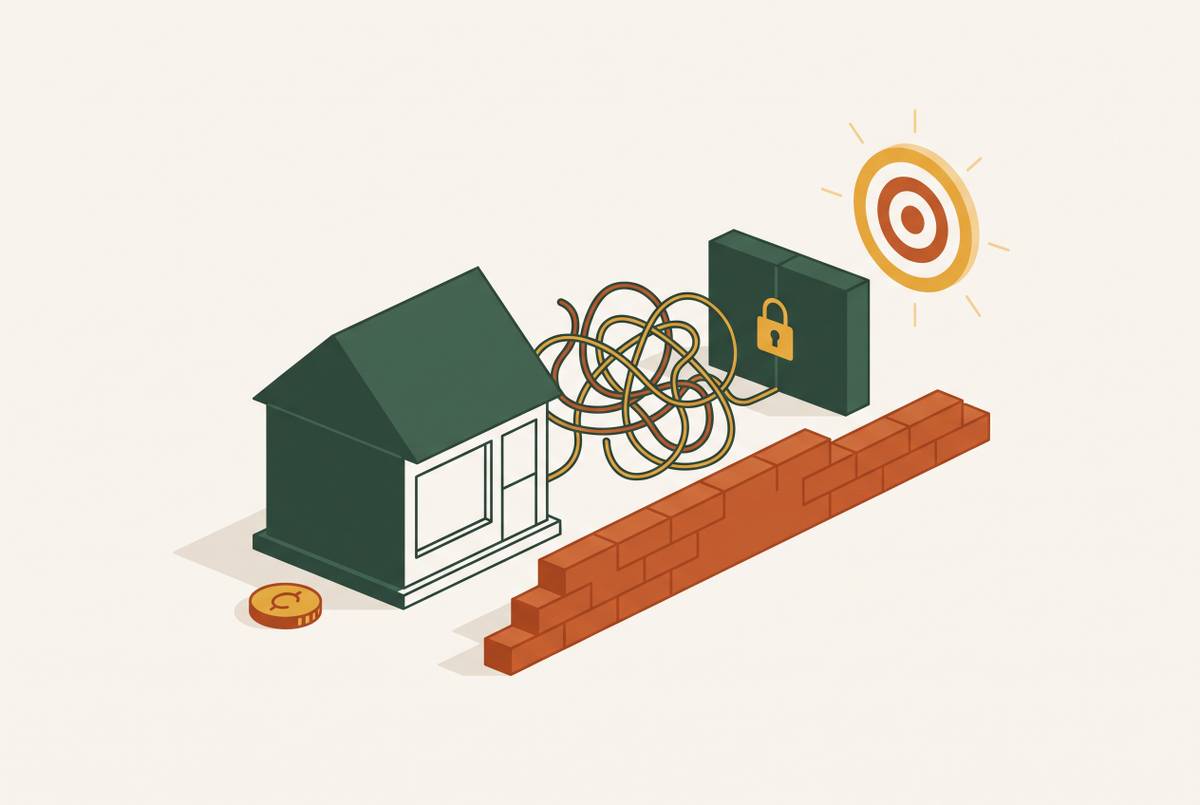
In a small business, the right lens for choosing that first workflow is a high-volume, repetitive task (invoice processing, data entry, inventory tagging, or moving figures from PDFs to spreadsheets), where volume is increasing as the business grows, since that's where a bottleneck is building and where AI can take over. The output looks reasonable, mostly. But something's slightly off, a coverage detail summarized in a way that doesn't quite match what's in the actual document, and there's no one on staff who can confidently say whether that's a real error or just an odd phrasing. So the broker goes back to reading the PDFs by hand. The subscription keeps renewing. Nobody cancels it. Nobody uses it either.
That's the modal outcome. It's the modal outcome. Capterra's 2025 Tech Trends Survey found that a majority of SMBs made a software purchase they regretted within the past 18 months, and small businesses were more likely than enterprises to pin that regret on how the tool got rolled out rather than on the tool itself. The product mostly works. The rollout is where things fall apart.
Part of what drives this is what might be called the parallel-process trap. Most SMBs bolt an AI tool onto an existing workflow without changing anything else about that workflow, so now there's AI output running alongside a manual double-check of that same output. Net time saved: none. And because nobody redesigned anything, the tool eventually looks like redundant busywork rather than what it actually is, which is a rollout that never got past the first step.
This is also why "we use ChatGPT" means almost nothing on its own. There's a real difference between one person poking at a chatbot and a business that has usage standards, an approved-tools list, and a staff that actually knows how to work with the thing. The former is a curiosity. The latter is a workflow change, and nobody is budgeting for that workflow change. Access to AI is cheap, close to free in most cases. What's scarce is knowing what to actually do with it once it's sitting inside the business, and that scarcity is what the next section breaks down.
The five specific places adoption breaks down after purchase
Five failure points appear repeatedly in how this stall plays out, and most SMB owners will recognize at least one of them.
No IT staff to manage the change. A large share of the small businesses surveyed by IDC don't employ a single full-time IT person. In that same survey, a third of respondents named lack of IT staff as a top challenge, and another third flagged user adoption itself as a major obstacle. Roughly half of U.S. small firms using AI report putting zero investment into implementation: no training, no change management, no time carved out for anyone to learn the thing. Tools arrive, in other words, with nobody whose actual job is to make them work.
Workflow design failure. That's the parallel-process trap again: AI ends up sitting next to the operation instead of inside it. Unless someone actually rethinks who inputs what, who checks what, and what step gets retired, a new tool just adds a step. It doesn't remove one.
Data quality as a hidden gatekeeper. Poor data quality and weak system integration are the top barriers to successful AI rollout among supply chain decision-makers, according to BCG research. For a small business with no IT department, this problem compounds fast, since operational records tend to live scattered across spreadsheets, old email threads, and legacy systems that were never built to talk to each other. AI surfaces that mess immediately. Garbage in, garbage out, and the owner blames the tool instead of the plumbing that produced the mess.
Security and compliance anxiety that freezes action. IDC's data found that implementing new technology securely is the single biggest challenge small businesses name, ahead of budget, ahead of user adoption, ahead of staffing. This anxiety is rational (a 10-person firm has no legal or IT function to review a vendor's data practices), but it produces inaction rather than informed evaluation. But rational fear still produces the same outcome, which is inaction rather than actual evaluation. And for businesses in regulated industries, further EU AI Act obligations took effect in August 2026, pushing AI into what one source called its "accountability era," which only tightens the freeze. According to Upwork Research Institute (n=195 SMB leaders), data security and compliance is the top adoption barrier at 27%, with uncertainty around ROI second at 24%.
Conviction at the top, no structure below it. Owners tend to be genuinely enthusiastic about AI; the willingness to adopt is real. The gap is turning that enthusiasm into an actual program instead of a string of one-off experiments that never scale. Goldman Sachs found that most SMB AI users say more training and resources would help them actually implement the technology. And per Forbes and SMB Group's research, only a small share of businesses ever reach advanced adoption; most stay stuck experimenting with one or two use cases with no larger strategy behind them. No IT staff to manage change. Deploying a tool and integrating it into a workflow are different problems, and most SMBs conflate them.
Why the tool-workflow mismatch is the root cause underneath the others
All five of those breakdowns trace back to the same structural gap. The decision to buy a tool and the decision about how work actually changes happen at different times, made by different people, often without ever talking to each other. Someone signs a contract because a tool promises to solve a stated problem, and the people who'll have to change how they work day to day are rarely in that room.
Enterprises paper over this with change management teams, IT departments, and project managers whose entire job is closing that gap between purchase and use. Small businesses typically have none of that infrastructure, so the gap just stays open. IDC documented small businesses acting as deliberate "fast followers," letting bigger companies absorb the cost of AI's early failures. That was smart thinking for the purchase decision. It does nothing for the integration decision, and the cost of that gap is still being paid, just quietly, subscription by subscription, inside businesses that never noticed they were paying it.
Nothing about the workflow changes because nobody redesigned it. Data quality issues sit unresolved, training never happens, and the old manual process remains the easiest path available, so the team drifts right back to it. This is exactly why the Capterra finding matters so much: SMBs blame regret on poor implementation, not poor product. The product, in most of these cases, is fine. What failed is everything around it.
If the mismatch between the tool and the workflow is really the root cause, then the fix isn't picking a different tool. It's changing how AI gets built into the business in the first place.
What embedded AI looks like compared to buying a tool and hoping it sticks
The traditional path looks the same almost everywhere: buy a subscription, sit through a demo, hand it to someone to "figure out," and watch it go quiet within about 90 days. Nobody planned for it to fail. It just wasn't built to succeed, because building it to succeed was never part of the purchase.
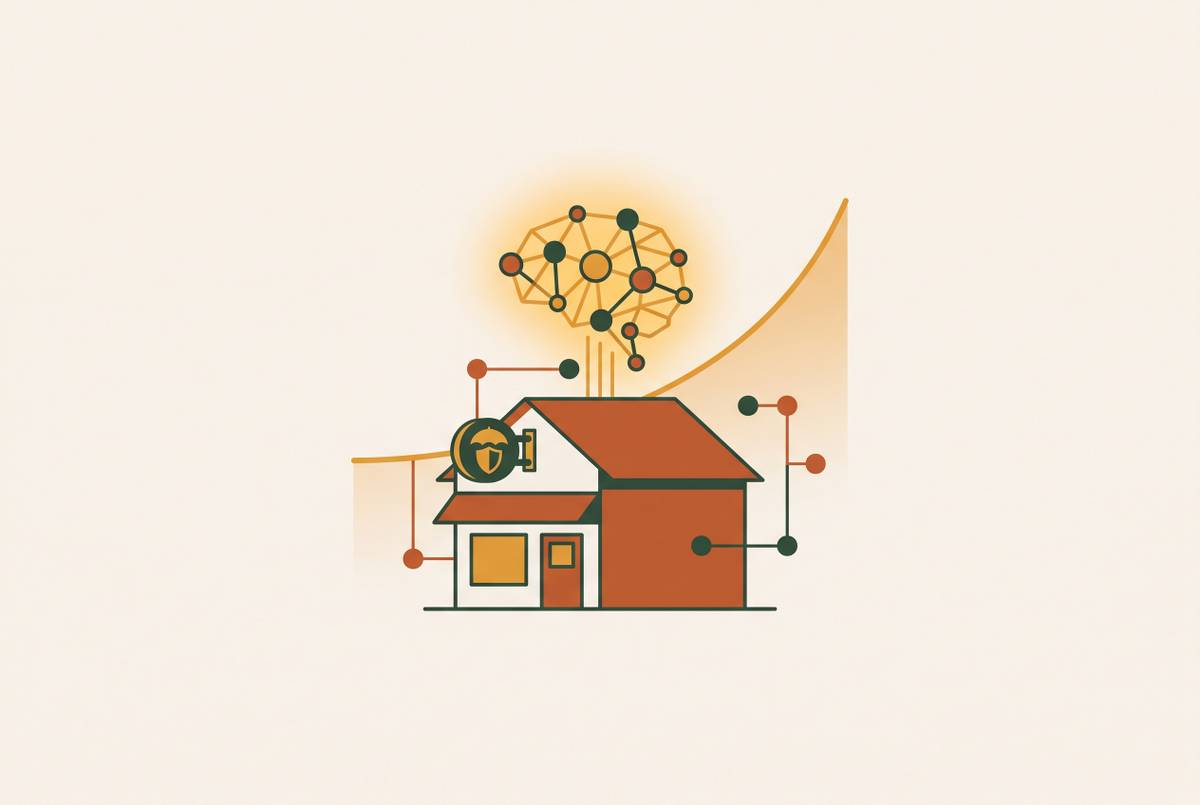
The embedded model runs on different logic. AI gets built into, or directly alongside, the workflows a team already owns, with someone actually accountable for making the thing work rather than just handing it over. As IDC's Evans put it, the SMBs seeing real results from AI build AI into their existing systems. They're switching on capabilities already living inside the platforms they use every day, their CRM, their ERP, their accounting software. No new interface to learn, no separate rollout cycle, no change management burden layered on top; the AI feature is just a feature, turned on inside a system people already trust.
A further version of that model pushes the idea harder: an embedded AI team, sometimes called forward-deployed engineers, who integrate directly into the business, work inside its existing systems, sit in on its meetings, and build alongside the people who actually own the work. That's a different relationship than a consulting engagement, where work happens somewhere else and gets handed over at the end. Embedded teams function more like temporary members of the staff.
SANSA is built around a two-week diagnostic to find the highest-leverage opportunity, a production-ready system built around that single opportunity, and continued embedding as the system compounds. The results bear out the difference between workflow-first and tool-first thinking: a dramatic reduction in manual data entry for an insurance broker, and 160+ hours a month saved for a freight company. Neither of those came from buying a subscription and hoping someone figured it out.
The cost of the alternatives: hiring versus contracting versus embedding
For most owners weighing this, hiring is the first comparison that comes to mind. Bring someone in-house who actually understands AI, and the problem solves itself, or so the thinking goes.
The math doesn't cooperate. A full-time hire in the U.S. costs a small business substantially more than the number on the offer letter once benefits, overhead, and management time get factored in. And that's assuming the hire can even be found: listings for forward-deployed engineer roles on Indeed grew dramatically between April 2025 and April 2026, which means competition for that talent is fierce and time-to-fill stretches long. LinkedIn Talent Insights and the 2025 Hired State of Software Engineers report both point to three to six months to fill a senior embedded role. Six months of recruiting, in other words, before a single workflow changes, followed by a full year of payroll regardless of what gets delivered.
An internal AI/data hire carries a significant annual cost, with a six-to-twelve month runway before anything is production-ready. For a business running 10 to 50 employees, committing something on the order of $200,000 with a six-month wait before a single workflow actually changes isn't a realistic bet.
Tool subscriptions cost little, but cheap is exactly the problem, and without anyone handling the implementation layer, these are the tools most likely to end up dormant. That is the entire stall this piece has been describing. The SMB AI spending benchmarks circulating for 2026 make far more sense as a starting budget for embedded implementation at scale than as a war chest for a hiring search. Building an internal AI/data team is the enterprise path transplanted to SMB, and it doesn't translate.
What the first 90 days of a working implementation looks like
Speed matters here, and it's measurable. Well-designed pilots tend to show real lift within 30 to 60 days, with a clear verdict on ROI landing by day 90. If a pilot is still murky by day 90, the problem isn't patience. It's the use case, the tool, or the workflow design, and no amount of extra time fixes that.
One practitioner framework sequences the work in a way that repays walking through. Before any AI touches anything, there's a data-access audit: where do the operational records actually live, who's allowed to see them, and which system counts as the source of truth when two disagree. This is exactly the groundwork most small businesses skip, and skipping it is a big reason tools stall out later.
From there, the first real target is one high-frequency workflow, proven in 90 days with a measured before-and-after. IDC's Evans points to the right place to look for that first workflow: high-volume, repetitive tasks such as invoice processing, data entry, inventory tagging, and pulling numbers off PDFs into spreadsheets, work whose volume keeps climbing as the business grows. That's where the bottleneck is quietly building, and it's exactly where AI earns its keep.
Only once that first workflow is solid does it make sense to add an agent layer on top, with the team keeping the knowledge in-house so the gains compound instead of resetting with every new hire. A scoped first capability delivered in something like 10 business days, a model gaining traction among embedded AI agencies in 2026, changes the entire risk calculation compared to a six-month consulting engagement. The business gets to see a working system before it's paid for the full engagement, which is a very different bet than signing a contract and hoping the thing works out six months later.
What SMBs that have moved past the stall have
The businesses that get past this stall tend to share a shape. They've stopped treating AI as a subscription decision and started treating it as a workflow decision, which sounds like a small distinction until you watch what it changes. Someone inside the business is accountable for making sure the tool actually gets used, not just for buying it.
And the first win was small and specific: one workflow, measured, proven, before anything else got added on top. That pattern produces every recovery story in this space, as the small, specific, measured first win before anything else got added on top shows. It isn't more enthusiasm for AI. It's less faith in the purchase, and more attention paid to everything that has to happen after it.
Sources
- Capterra’s 2025 Tech Trends Report: SMBs vs. Enterprises | Capterra
- IDC - SMB AI Adoption 2026: From Wait-and-See to All-In
- SMB AI Adoption Is Rising — Real Usage Is the Opening
- AI Adoption Surged. Systems Still Missing.
- The State of AI Within SMBs in 2026 - Upwork
- Small Business AI Statistics 2026 - AdAI News