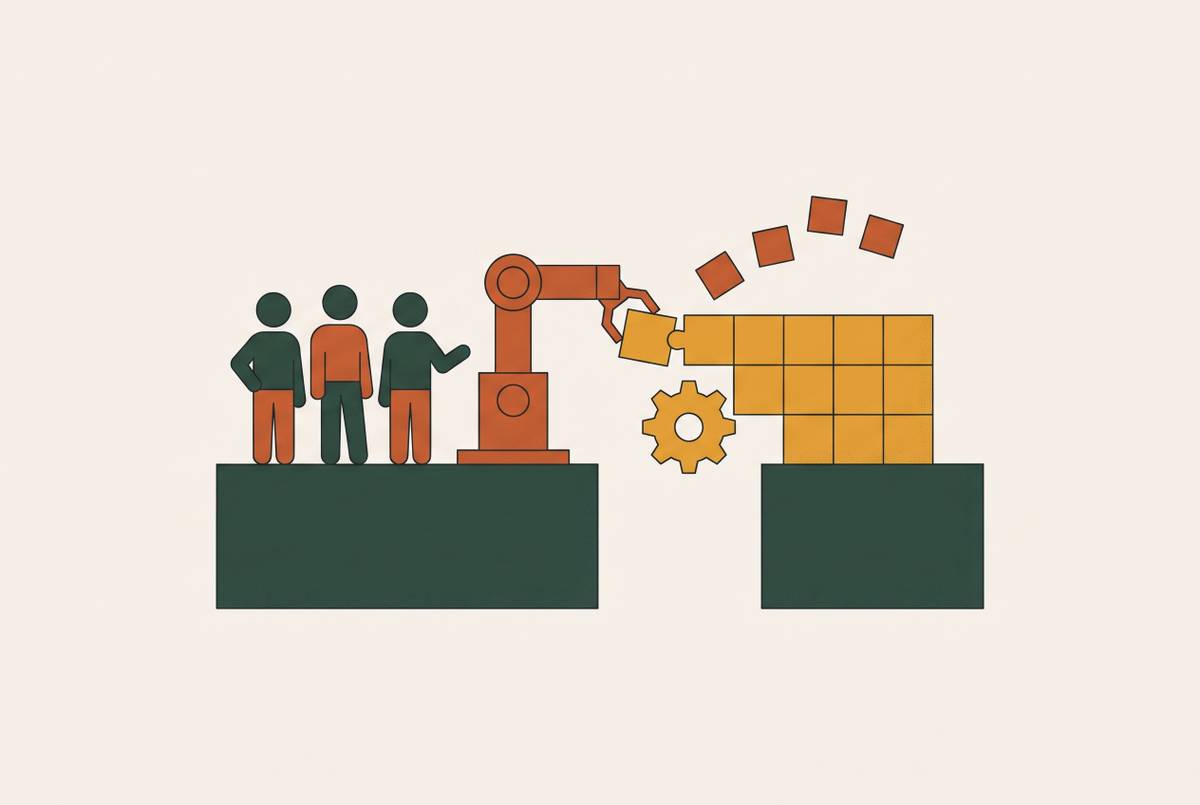
Embedded AI Engineer Model vs. Traditional IT Consulting for SMBs
Embedded engineers deliver faster AI gains by staying after launch to tune working systems.
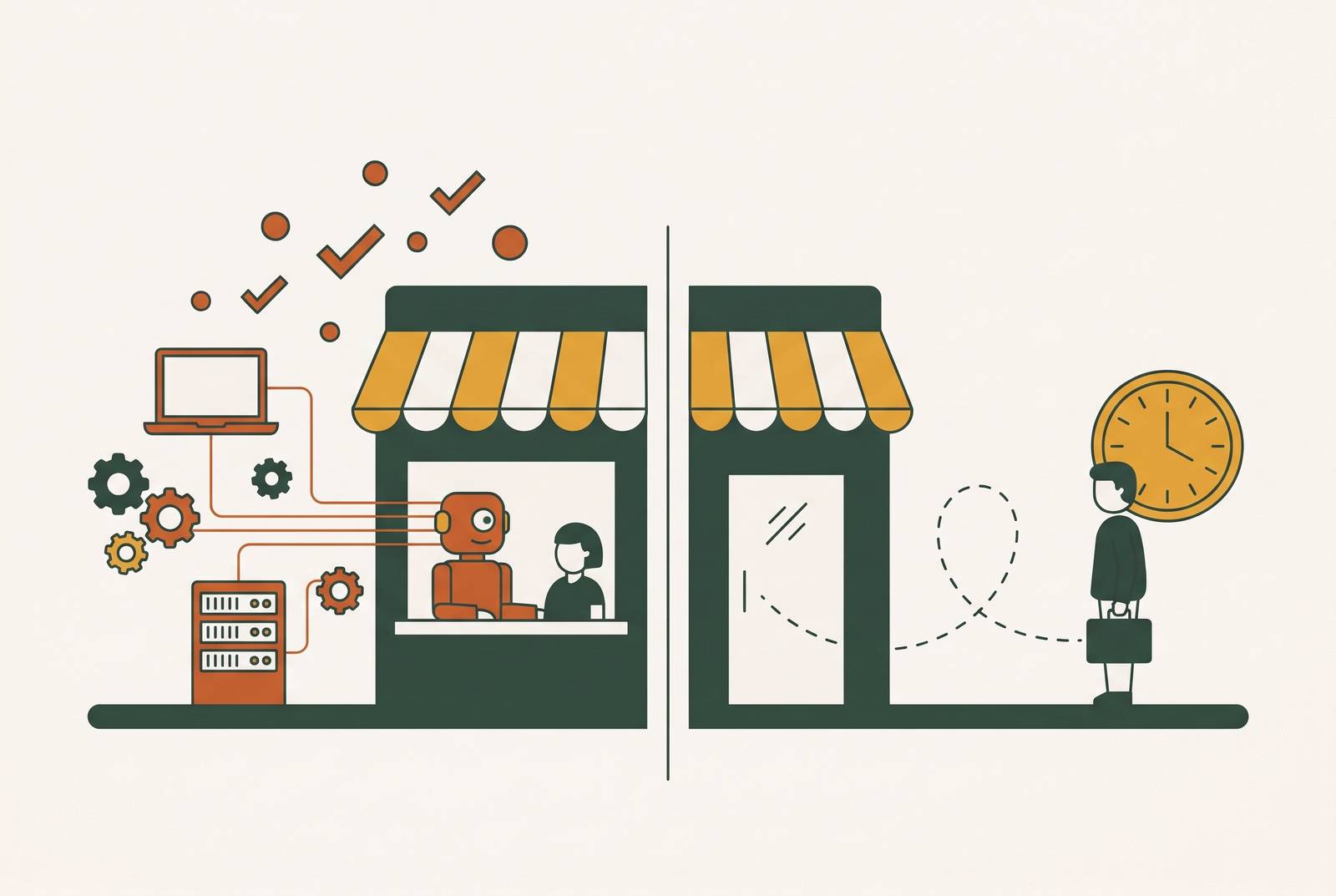
A small business can handle AI engineering work without hiring a full-time developer by using an embedded AI engineer who builds and improves systems inside its existing workflows. Compared with traditional IT consulting, this model delivers faster, compounding operational gains because it stays after launch. It fits businesses that need working capacity.
Why SMBs are stuck at tool access, not operational AI
There is a sharp difference between an owner using an AI chatbot and a team running a different workflow because of AI. In the first case, the owner gets help with individual tasks. In the second, the business changes how work moves between people and systems. SMBs in 2026 have broad access to AI tools, but those connections are often missing. The gains stay at one desk.
Vendasta’s embedded AI guide compares a reply drafted in a standalone tool with one drafted inside the CRM inbox the user already has open. The underlying intelligence may be comparable, but its place in the work changes the outcome. With the standalone tool, the person still has to move between systems. Embedded AI puts the output where the work happens. That is an implementation difference.
Business owners already see recommendations, smart replies, and real-time pricing in the consumer software they use. Their expectations are not the problem. Yet their own work still relies on manual handoffs, even after they buy AI tools. Without someone connecting those tools to live workflows, adoption can grow while the business’s ability to handle more work stays flat.
Why the FDE model that solves this problem was built for enterprises, not SMBs
The Forward Deployed Engineer model addresses this implementation gap by putting engineers close to live business work. Enterprise consulting is formalizing that role. Accenture launched a joint FDE practice with Microsoft in 2026. EY launched dedicated FDE roles in the UK and Ireland in 2026. These developments point toward embedded engineering, but they do not make that capacity broadly available to small businesses.
Enterprise practices are built around enterprise engagements, while AI-lab engineers have responsibilities tied to their employer’s technology. Integration code is only part of the job. Product naming, an empty state, a launch sequence, and visual identity sit outside the integration remit described for Anthropic Applied AI Engineers. Shipping the connection does not mean owning everything needed to turn it into a working business capability.
A small team needs someone to connect technical delivery with how people will actually use the result, rather than another specialist whose remit ends at the integration. The gap is structural. A model designed for a different market cannot become an SMB service merely by reducing its price. Its scope and responsibility have to change too.
What traditional IT consulting actually delivers when an SMB hires it for AI
When a small business reaches for traditional IT consulting, it usually buys an engagement organized around delivery milestones. A platform goes live, the agreed work is completed, and the project closes. Those are clear measures of delivery. They are not necessarily measures of whether AI has changed the cost or capacity of a workflow. The mismatch begins with what the engagement treats as success.
An AI system can be installed correctly and still leave the operational bottleneck intact. Its output needs somewhere useful to land. Vendasta calls disconnected features “islands of intelligence,” a useful description of capable software separated from the work it should improve. If the output never reaches the system of record, someone still has to bridge the gap manually. The business has bought a system without removing the handoff.
The exit point creates a second problem. Traditional consulting is designed to deliver a finished product and leave, while AI workflows need tuning as the business learns what works and what fails. The scope needed to include the work required after launch.
Traditional consulting still solves real problems for large organizations with multiple departments, multi-quarter timelines, and complex change management. That coordination has a purpose. For an SMB under 50 employees, however, the same overhead may buy a service the team does not need. A business in that position can benefit more from shipping one specific implementation, then shaping its strategy around what the working system reveals.
How can a small business add engineering capacity without hiring a full-time developer?
An embedded AI engineer changes what the business buys as well as what it pays for a project. The engagement starts with the time the workflow consumes and the capacity it blocks. The engineer first asks which part of that work AI can materially change. Choosing a platform comes later. Answering that question requires access to the people doing the work.
Vendasta’s framework looks at software product strategy, but its comparison of embedded and bolted-on AI also shows how AI changes day-to-day work. Embedded AI works inside an existing product and uses that product’s own data to automate tasks and take action. For an SMB, the engineer’s job is to build those connections, automate the handoff, and define who approves what. The output belongs in the CRM, calendar, inbox, or billing system that the workflow actually touches.
The responsibility then extends beyond launch. When the business learns what the AI gets wrong, the engineer can tune the system for the next cycle. That continuing responsibility changes what the engagement buys. It provides capacity to improve a working operation, rather than a finished artifact that the team must maintain alone.
An embedded service can also supply several disciplines. Utsubo’s studio model uses a vendor-neutral pod of two to four people for three to six months, combining engineering with brand and communications work. Vendor neutrality also keeps platform choice tied to the workflow, rather than to a software partnership or the stack a consultant already knows. These are differences in how the service works.
What 30-day deployment looks like in practice, and why the timeline is achievable
A 50-person company can get a production AI workflow live in 30 days when the engagement stays focused on one confirmed bottleneck. That is not a promise that every AI project takes a month. Open-ended discovery gives way to a fixed window, while a continuing embedded relationship removes the need to end the project with a post-launch handoff.
Diagnosis takes roughly the first two weeks. The engineer and the team identify the candidate workflow, establish how much time it costs, and map every manual handoff. They also identify where the output must land in an existing system of record. That destination shapes the build. Without it, the team could produce useful AI output while the workflow stays the same.
The build runs through weeks two to four, using the confirmed bottleneck to keep the scope narrow. The engineer connects outputs to the actual system of record and defines approval and escalation logic. The team must be able to run the workflow without the engineer present. Staying embedded means remaining responsible for tuning and improving the system after people begin using it.
SANSA reports an 80% reduction in manual data entry for an insurance broker and more than 160 hours a month recovered by a freight company. These are examples of outcomes from embedded systems built around operational bottlenecks. They put the focus on work removed. Neither outcome is simply a count of tools installed or people given access.
The cost comparison also needs the right frame. Utsubo puts its total studio engagement cost at roughly one mid-band AI-lab FDE’s annual compensation. That buys a multi-discipline pod for the duration of the engagement. The distinction helps an SMB compare the scope of outside capacity with a hire without pretending the two purchases are interchangeable.
Why the embedded model’s value compounds past the first win, where consulting stops
Once the first bottleneck is removed, the queue shifts. Work that was previously delayed can move forward, exposing the next constraint more clearly. The first system therefore becomes a diagnostic as well as an improvement. An embedded engineer can act on what it reveals while the workflow context is still close at hand. A closed consulting engagement has no such continuing mandate.
The data connections built for the first workflow can also help with the next. Vendasta’s framework describes moving from fragmented AI features toward a single source of truth that powers in-app automation. The operational parallel is straightforward. When the data and workflow context are already mapped, the next system need not begin with the same discovery work. The benefit comes from reusing what the business has learned.
SANSA frames its embedded engagement around faster decisions, new service lines, and capacity that previously would have required another hire or another year. Those are directions for continuing improvement. The engagement needs room to pursue them. Under a project model that scopes, delivers, and closes each piece separately, the next problem instead triggers another contract, discovery phase, and ramp-up.
The strongest objection is that a business may not yet know what to build. Committing to an embedded pod can feel premature. The embedded model’s diagnostic phase addresses that concern by including advisory work tied to a specific implementation. Where it does fit, compounding comes from repeated correction and improvement, which requires someone to stay inside the work.
How to evaluate which model fits an SMB’s actual situation right now
The practical choice starts with the outcome the business needs. A lighter advisory engagement can fit a team that has no clear sense of its bottleneck or needs to resolve competing departmental priorities. Traditional consulting fits broader coordination and complex change management. An embedded engineer fits a business that needs an operational system built and improved.
For the embedded model, a specific constraint is the strongest signal. It should be costing time, capacity, or revenue, and the team that owns the work should be available to inform the build. The desired result should be a working system in weeks. Access to the team is essential. An engineer cannot accurately redesign a workflow without the people who understand its handoffs and exceptions.
The case becomes sharper when the alternative is another hire. When a business knows what it needs to implement with AI, an embedded engineer can spare it the 4–6 month wait to hire without adding a full-time developer. It is an alternative when the immediate need is to remove a bottleneck and keep improving the resulting system.
Before choosing a partner, a business should ask four questions. Will the partner identify the bottleneck, or does the business have to specify what to build? Does the engagement continue after launch, or end in a handoff? Is the partner vendor-neutral, or optimizing for a platform it already knows? Can it show a before-and-after workflow from a similar business?
SANSA fits the embedded side of this framework through its focus on confirmed operational bottlenecks, working systems, and continued improvement. Its insurance and freight examples show buyers results they can compare with what their own businesses need. For an SMB whose growth is blocked by manual work, that is the relevant test of added technical capacity.